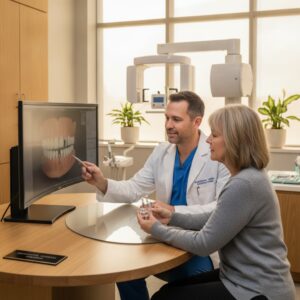
A healthy smile is more than just having beautiful teeth. It’s also about maintaining healthy gums and tissues surrounding your teeth. When these tissues recede, it can lead to a variety of problems, including tooth sensitivity, bone loss, and even tooth loss. Fortunately, there is a procedure called a soft tissue graft that can help restore the health of your gums and protect your teeth.
What is a Soft Tissue Graft?
A soft tissue graft is a surgical procedure that involves taking healthy gum tissue from one area of your mouth and transplanting it to another area where the gums have receded. This additional tissue helps to cover exposed tooth roots and prevent further recession. There are three main types of soft tissue grafts:
| • | Free Gingival Grafts: This is the most common type of soft tissue graft. It involves taking tissue from the roof of your mouth and transplanting it to the area where the gums have receded. |
| • | Connective Tissue Grafts: This type of graft uses tissue from under the surface of your gums. It is often used in conjunction with a free gingival graft to provide additional support. |
| • | Pedicle Grafts: This type of graft involves taking tissue from an adjacent area of your gums and rotating it to cover the exposed tooth root. |
How Soft Tissue Grafts Benefit Your Oral Health
Soft tissue grafts offer a number of benefits for your oral health:
| • | Prevent further gum recession: By covering exposed tooth roots, soft tissue grafts help prevent further gum loss. |
| • | Reduce tooth sensitivity: Exposed tooth roots are often sensitive to hot and cold, as well as sweet and acidic foods. A soft tissue graft can help cover these exposed roots and reduce sensitivity. |
| • | Improve the appearance of your smile: Gum recession can make your teeth look longer and can create a “gummy” smile. A soft tissue graft can help restore the natural contours of your gums and improve the appearance of your smile. |
| • | Protect your teeth from decay: Exposed tooth roots are more susceptible to decay. A soft tissue graft can help protect your teeth from cavities. |
| • | Support dental restorations: If you have existing dental restorations, such as crowns or bridges, a soft tissue graft can help protect them from damage caused by gum recession. |
Choosing the Right Soft Tissue Graft Option
The best type of soft tissue graft for you will depend on several factors, including the severity of your gum recession, the location of the recession, and your overall oral health. Your periodontist will discuss your options with you and help you choose the best course of treatment.
Recovering from a Soft Tissue Graft
After a soft tissue graft, you will need to follow your periodontist’s instructions carefully. This will usually involve a soft diet for a few days and avoiding strenuous activity. You may also need to take antibiotics to prevent infection.
Most people recover from a soft tissue graft within a week or two. Once your gums have healed, you should be able to resume your normal oral care routine.
Maintaining Healthy Gums After a Soft Tissue Graft
Even after a soft tissue graft, it is important to maintain good oral hygiene to keep your gums healthy. This includes brushing your teeth twice a day, flossing daily, and seeing your dentist for regular checkups and cleanings. By following these tips, you can help ensure that your gums stay healthy and that your smile stays beautiful.
If you are concerned about receding gums, talk to your periodontist. They can assess your oral health and determine if a soft tissue graft is right for you.