Maintaining good oral care is essential for overall health and well-being.
 Brushing, flossing, and regular dental checkups are crucial for preventing cavities and gum disease.
However, sometimes even the most diligent efforts may not be enough.
This is where a periodontist can play a vital role in safeguarding your oral health.
What is a Periodontist?
A periodontist is a specialized dentist who focuses on the prevention, diagnosis, and treatment of diseases affecting the gums and supporting structures of the teeth.
These include the gums, bones, and ligaments that hold your teeth in place. Periodontists receive extensive training beyond dental school, focusing specifically on periodontal health.
When to See a Periodontist
Several signs and symptoms may indicate the need to consult a periodontist. These include:
| • | Bleeding gums: While occasional bleeding during flossing might happen, consistent bleeding during brushing or flossing could indicate gum inflammation or early-stage periodontal disease. |
| • | Red, swollen, or tender gums: Healthy gums should be firm and pink. Redness, swelling, or tenderness can be signs of gum disease. |
| • | Receding gums: If your gums appear to be pulling away from your teeth, exposing the roots, this could be a sign of advanced periodontal disease. |
| • | Loose teeth: Loose teeth can be caused by various factors, including periodontal disease. |
| • | Persistent bad breath: While bad breath can have various causes, persistent bad breath or a metallic taste in the mouth could indicate periodontal disease. |
| • | Changes in bite: If your bite feels different or your teeth seem to be shifting, it could be due to bone loss caused by periodontal disease. |
What to Expect During Your Visit
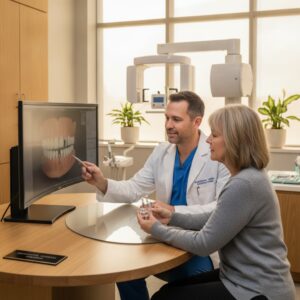
Your initial consultation with a periodontist will likely involve a thorough examination of your gums and teeth. They will assess your oral hygiene habits, medical history, and any concerns you may have.
X-rays may be taken to evaluate the health of your bone and the extent of any bone loss.
Based on the findings, the periodontist will discuss treatment options with you and answer any questions you may have.
Conclusion
Maintaining good oral hygiene is essential, but it is not always enough to prevent periodontal disease.
If you experience any of the symptoms mentioned above, it is important to consult a periodontist for proper diagnosis and treatment.
Remember, early intervention is crucial to preserving your oral health and preventing further complications.
Note: This information is intended for general knowledge and does not substitute for professional medical advice. Always consult a qualified healthcare professional for any health concerns or before making any decisions related to your health or treatment.