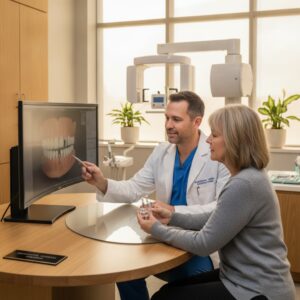
Gum recession occurs when the gum tissue which partly covers the teeth is worn out or detached from the tooth’s surface, thus exposing the tooth roots underneath. The gum recession gradually develops with time. As a result, many people are unaware that they may already have it.
 Gum recession can contribute to tooth loss when left unchecked. Some studies further demonstrate that gum disease relates to chronic conditions like heart disease and diabetes. Knowing the signs of gum recessions is paramount so that you seek help early enough.
Sensitive Teeth
Sensitivity is an early indicator of gum recession. Pain and discomfort are experienced when biting down or chewing. However, you may also encounter difficulty when biting down before you experience tooth sensitivity or discomfort.
Exposed Teeth and Movement
You may notice more of your tooth begin to move since there is little support provided by the gum tissue. It is an easy method of determining gum recession. More of the tooth can be seen, showcasing lines or notches at the bottom areas of the teeth. Your teeth begin to move slightly they give the impression of incorrect alignment.
Swollen and Bleeding Gums
Gum disease presents with red, swollen gums. This, as well as bleeding gums when you brush or floss, can lead to gum recession. Your gums could bleed even when using soft bristle brushes or brushing gently with toothpaste specifically designed for sensitivity.
Loose Teeth
Loose teeth are a sign of periodontal disease and severe gum recession. The teeth’s supporting bone structure degenerates and will lead to tooth loss when neglected.
Treatment for Gum Recession
Dentists have various ways to treat recessed gums. Extensive cleaning known as scaling and root planing work effectively to help gums re-attach. A dentist may also conduct gingival tissue grafting to re-introduce the gum tissue. The extent of gum recession determines how it is treated. Visit us to know more about the best solutions for gum recession.