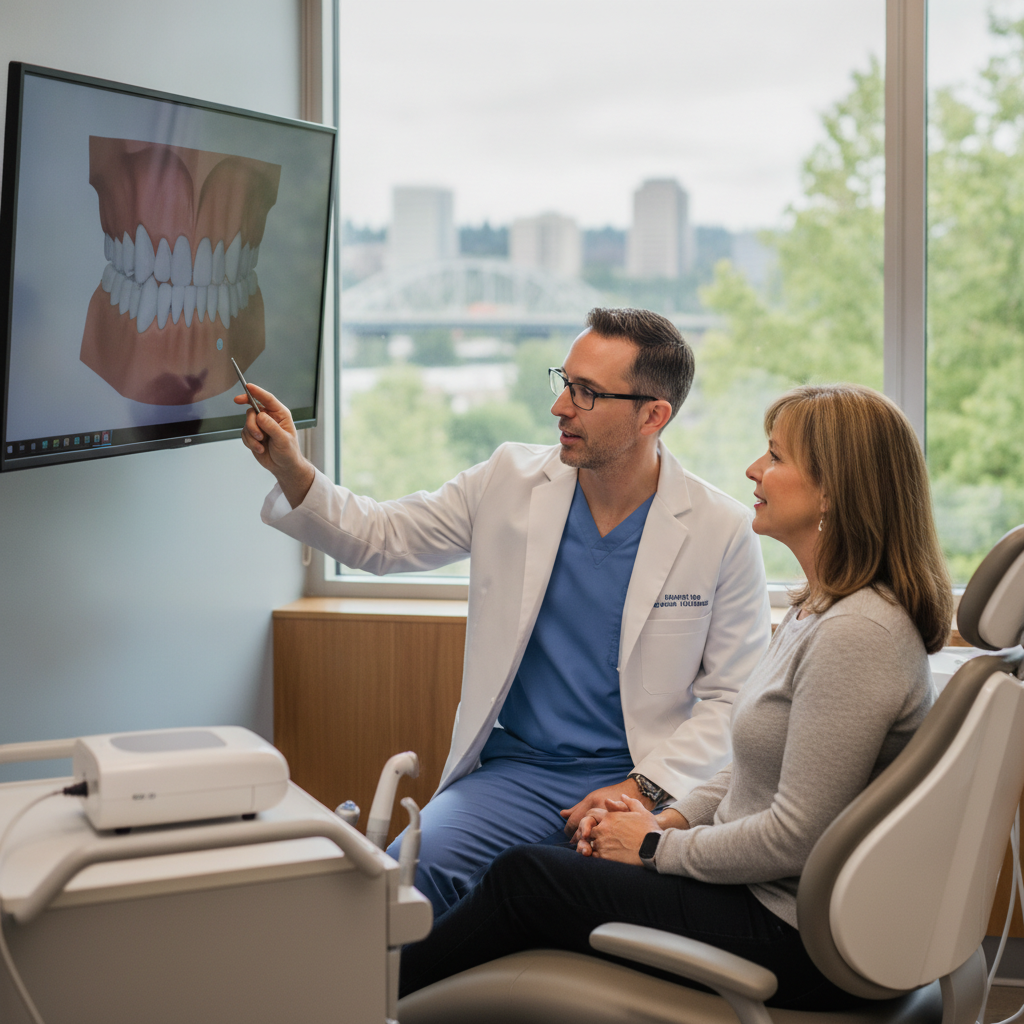
Your gums bleed when you floss, and lately your breath doesn’t feel fresh no matter what you do. Finding the right Portland periodontist can make a real difference when gum problems start to show up.
At Periodontal Associates, our periodontists care for patients in Portland, Beaverton, and Tualatin. Here’s what gum disease looks like, what a periodontist does, and how to choose a Portland periodontist you’ll trust.
How Periodontal Disease Develops
Periodontal disease, or gum disease, is an infection of the tissues that hold your teeth in place. It starts with bacteria in plaque and can slowly damage the gums and bone. Left untreated, periodontal disease can result in tooth loss. Bleeding gums, bad breath, and loose teeth are signs to take seriously.
What a Portland Periodontist Does
Periodontists prevent, diagnose, and treat gum disease, and they place dental implants. Their extra training focuses on the gums and bone, so they’re the right choice for problems that go beyond a routine cleaning.
General Dentists vs. Periodontists
Your general dentist handles everyday care. A periodontist treats deeper gum problems with procedures like scaling and root planing, laser therapy, and gum graft surgery.
Gum Surgery in Portland
If you’ve been told you need gum surgery, it helps to know what’s involved. Common procedures include flap surgery, bone grafting, and guided tissue regeneration, which helps the body rebuild lost bone and tissue. Many of these procedures are less invasive than they used to be.
Laser Options for Gum Treatment
LANAP, a laser gum procedure, treats gum disease with less cutting than traditional surgery, and many patients have an easier recovery.
How to Choose a Periodontist
Start with the basics: credentials, experience, and how comfortable you feel with the team. Look for a periodontist who explains your options clearly and gives you a written plan.
Credentials and Experience
Check where your periodontist trained and whether they’re board-certified. Experience with implants and gum surgery matters if you might need those treatments.
Questions to Ask at Your First Visit
-
How advanced is my gum disease?
-
What are my treatment options, from least to most involved?
-
What will recovery look like?
-
How often will I need maintenance visits afterward?
New Approaches in Periodontal Care
Periodontal care keeps improving. At Periodontal Associates, CT scans and guided surgery help us plan treatment precisely, especially for implants.
Keeping You Comfortable
Sedation options and less invasive techniques help make treatment easier. A good periodontist will talk through your worries and plan around them.
Planning Your Treatment
Your plan should fit your mouth and your life. Many people start with non-surgical care and only move on to surgery if it’s needed.
A Personal Evaluation
Your periodontist will look at how advanced your gum disease is, your health history, and habits like smoking before recommending a plan. You should leave understanding why each step is recommended and what happens if you wait.
What Happens at Your First Periodontal Visit
Your first visit usually starts with a conversation about what you’ve noticed and your health history. Then your periodontist measures the pockets around each tooth with a small probe, checks for gum recession, and looks at X-rays to see the bone levels.
From there, you’ll hear what stage your gum disease is in, if any, and what treatment would help. Many people leave their first visit relieved, simply because they finally understand what’s going on.
Living With Healthier Gums
After treatment, most people notice their gums bleed less, their breath feels fresher, and their teeth feel more secure. Keeping it that way usually means regular maintenance cleanings every few months and good habits at home, like cleaning between your teeth every day.
Why Gum Health Matters Beyond Your Mouth
Gum disease isn’t just about your teeth. Research has linked it to other health conditions, including diabetes and heart disease. Keeping your gums healthy is part of taking care of your whole body.
That’s one more reason not to ignore bleeding gums or a dentist’s warning about pocket depths. Treating gum disease early is simpler, more comfortable, and usually less expensive than waiting until teeth start to loosen.
FAQs About a Portland Periodontist
What is a periodontist?
A periodontist is a dentist who specializes in treating gum disease and placing dental implants.
When should I see a periodontist?
If you notice bleeding gums, persistent bad breath, receding gums, or loose teeth, or if your dentist refers you.
How is gum surgery done?
It depends on the procedure. Most involve cleaning, reshaping, or rebuilding gum and bone under local anesthesia.
What treatments are available for periodontal disease?
Options range from deep cleanings to laser therapy, grafts, and regenerative surgery.
Healthier Gums Start Today
Small gum problems are easier to fix before they grow. Schedule a consultation with Periodontal Associates and find out why so many people choose us as their Portland periodontist.