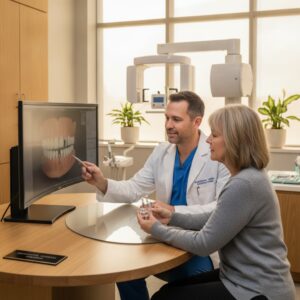
Gum disease can be stopped and reversed in the early stages when your gums are first starting to be sore, inflamed, and bleeding. As the disease advances, though, opportunities to reverse the damage and stop the progress diminish.
How to Stop Gum Disease Early
Healthy gums are firm to the touch and pink. When your gums swell, become red or inflamed, or you have blood in the sink when you brush, you may be at the early stages of gum disease that may lead to receding gums. At this point, the damage is reversible.
Reengage your good oral hygiene habits; brush regularly, floss deliberately, use a bacteria-killing mouthwash, and increase the frequency of your teeth cleanings. At the early stages of gum disease, your good habits can make all of your oral health difference.
How to Slow the Progress of Gum Recession
If, after a physical examination, you have gum disease that has progressed to tissue, bone, or tooth loss, you can take steps to slow the progression. Again, good oral hygiene practices are an essential first step.
Often, inflamed gums are a sign of infection, and we may prescribe an antibiotic. It would be best if you continued to get your regular cleanings, but a deeper cleaning, also called tooth scaling and root planing, may help alleviate the progressing disease’s symptoms. This process will remove the plaque and tartar build-up beneath the gum line and smooth the root area to prevent bacteria from reattaching the surface. If office-based scaling and planing cannot be effective because of bone loss, surgery may be needed to repair the damaged areas.
If you think that you are in any stage of gum disease, call our office. We can help you determine your gums’ health and an effective treatment plan to get you back on track.