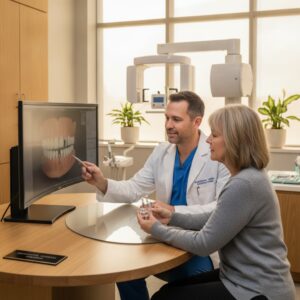
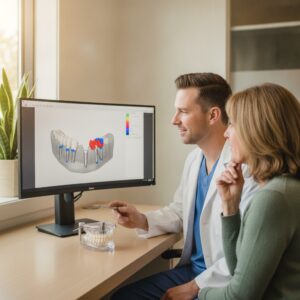
If you are considering making the switch from dentures to implants, there are a few things to know about. There are various pros to choosing implants over dentures, but it is crucial to understand what to expect before making the switch.
 Why Switch From Dentures to Implants?
Unlike dentures, which can be uncomfortable and prone to slipping, implants offer a secure and comfortable fit that restores form and function. Since implants are installed directly into the jawbone and allowed to fuse with the tissue over time, they provide a strong foundation for new teeth that resemble natural ones in both appearances and feel. In addition to these benefits, implants offer several other advantages that make them a clear choice for those looking to switch from dentures to a more permanent solution. Whether you are looking for better aesthetics, improved confidence, or more excellent stability when eating or speaking, implants will provide the results you need.
Things To Keep In Mind Before Switching
First and foremost, it is essential to consult with your dentist or oral surgeon to make sure that you have a candidature for dental implants. While most healthy adults are eligible for the procedure, certain medical conditions can make implants risky. In addition, it is vital to have realistic expectations about the cost and timeline of your implant surgery. While implants are often more expensive than dentures up front, they typically last much longer and do not require maintenance. As such, they offer a more excellent value over time. Finally, discuss your surgery and recovery timeline with your dentist. Implant surgery is an effective procedure, and it is vital to have a clear understanding of what to expect before moving forward.
If you consider switching from dentures to implants, then be sure to consult with our oral surgeon. They will be able to help you discover if implants are the right choice for you.
 Periodontal diseases affect a person and give one a hard time going through the pain. It provides one discomfort. Periodontal diseases can be corrected either surgically or non –surgically. Periodontists are well trained to treat gingival and periodontal diseases and administer anesthesia for invasive procedures.
Surgical processes include.
Pocket reduction surgery [flap surgery] is where the periodontics makes a tiny incision in the gum so that a section of the gum can be lifted back where the roots of a tooth are exposed for effective root planing and scaling; the underlying bone is recontoured before the gum is placed back into position after healing cleaning of the teeth is more accessible and practical. Soft tissues grafts when one loses the gum tissue the gum line recedes some of the damaged soft tissue is reinforced this is achieved by removing a small amount of tissue from the palate, or the periodontist can use tissue from a donor. It is attached to the affected area, reducing gum recession and covering the exposed area, thus giving teeth a pleasing appearance.
Bone grafting is done when periodontitis has destroyed the bone surrounding the teeth. The graft can have small fragments of the patient; the bone can be donated or synthetic. This procedure helps prevent teeth loss where it holds the tooth in the correct position. Tissue regeneration provides the regrowth of a bone that bacteria have destroyed. The periodontist places a piece of biocompatible fabric between the tooth and the existing bone; this fabric prevents unwanted tissues from getting into the healing area; thus, the bone grows back. Tissue stimulating proteins this is where a gel is applied to a diseased tooth. This gel has the same proteins as those in the enamel, thus stimulating the growth of healthy tissue and bone.
Surgical treatment for periodontal disease.
Scaling where the tartar and plaque are removed, lasers are used, and root planing is smoothening the root surface. It eliminates bacteria that bring about inflammation and swelling of the gums and makes the healing process slower or reattaching the gum to the tooth’s surfaces. Antibiotics can also be used where they control bacterial infection. Antibiotics that are topical include antibiotic rinses or inserting gels that contain antibiotics. Oral antibiotics eliminate infection, which causes bacteria.